Cart
0
Let me ask you something.
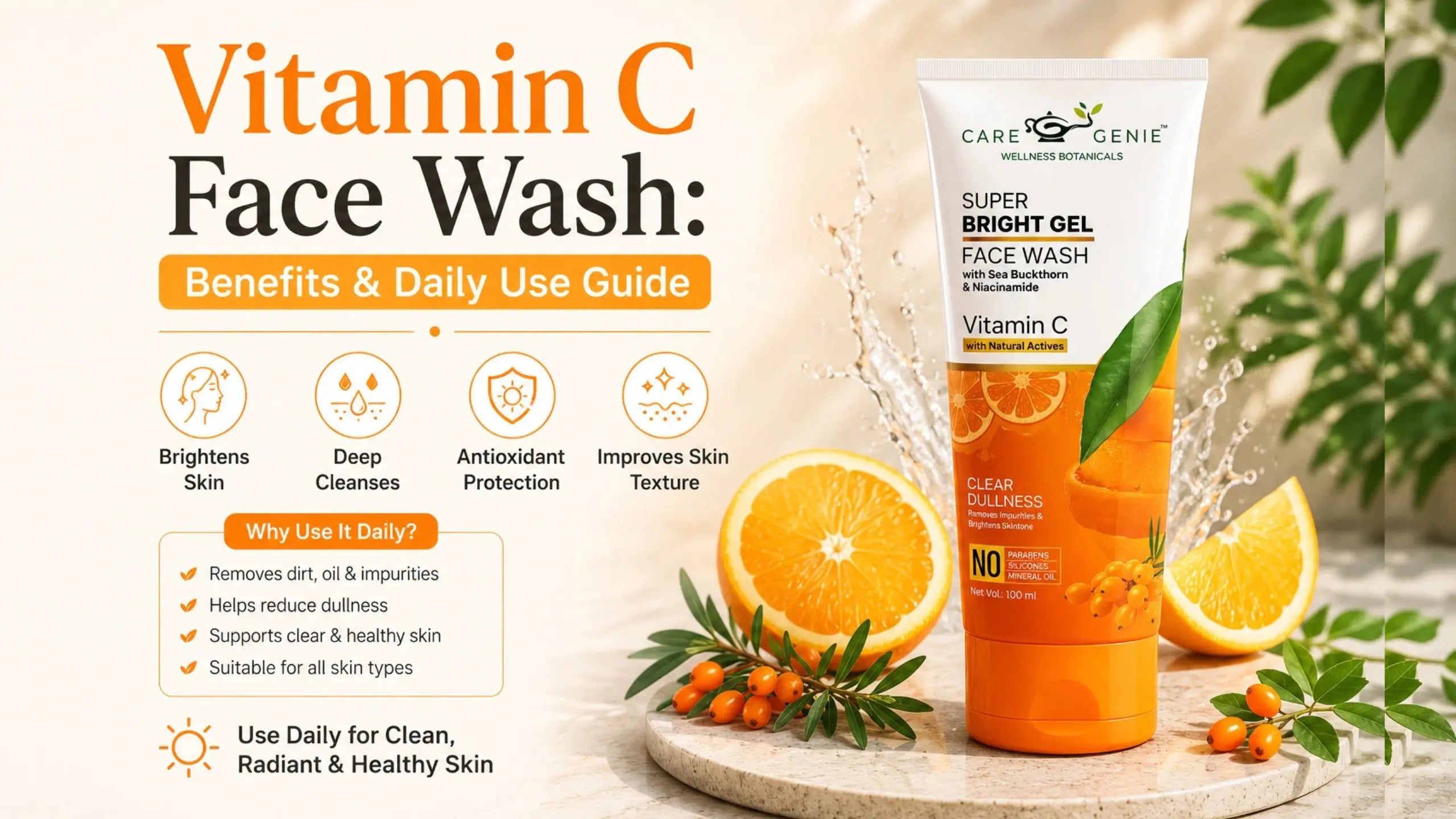
You have probably heard about Vitamin C serums. Vitamin C supplements. Vitamin C for immunity. But when was the last time someone actually broke down what a Vitamin C face wash does — and whether it is even worth adding to your routine?
That is exactly what we are going to talk about today.
No fluff. No pushing products. Just straight, honest information.
Why Vitamin C and Your Skin Are a Good Match
Your skin deals with a lot every single day. Sun. Pollution. Dust. Screen time. All of it leaves behind damage that adds up slowly — uneven tone, dullness, stubborn dark spots, and that general tired look that no amount of sleep seems to fix.
Vitamin C works against all of that.
Here is why it actually makes sense for skin:
- It fights free radicals — pollution and UV rays create free radical damage on your skin every day. Vitamin C neutralizes them before they can break down your collagen and dull your complexion.
- It brightens without bleaching — Vitamin C does not lighten your skin artificially. It works on melanin production, which means it fades dark spots and evens tone in a natural, gradual way.
- It supports collagen — Collagen is what keeps skin firm and plump. Vitamin C is directly involved in collagen synthesis, which is why consistent use helps skin look younger over time.
- It calms inflammation — Redness, irritation, post-acne marks — Vitamin C has mild anti-inflammatory properties that help with all three.
So What Does a Vitamin C Face Wash Specifically Do?
This is where most people get confused.
A face wash does not sit on your skin. It rinses off. So how does Vitamin C even have time to work?
Good question.
A Vitamin C face wash works in two ways:
First — it cleanses your skin while delivering a quick dose of antioxidant protection. Even a short contact time is enough to start neutralizing surface-level oxidative stress.
Second — it preps your skin. Clean skin absorbs whatever comes next — your serum, moisturizer, sunscreen — far better. So when Vitamin C face wash is step one, everything that follows works harder.
Think of it as laying the groundwork, not doing all the work alone.
5 Real Benefits of Using Vitamin C Face Wash Daily
1. Dullness Goes Away — Gradually But Visibly
This is the most common reason people start using it. Within three to four weeks of daily use, most people notice their skin looks less flat. More alive. That grey, tired look starts lifting.
2. Dark Spots Begin to Fade
Post-acne marks, sun spots, uneven patches — Vitamin C slows down excess melanin production. It does not erase spots overnight, but with consistent use they genuinely lighten over time.
3. Skin Feels Cleaner Without Feeling Stripped
A good Vitamin C face wash removes dirt, excess oil, and pollution without destroying your skin barrier. Your face should feel clean after washing — not tight, not dry, not squeaky.
If it feels tight after rinsing, that face wash is too harsh for you.
4. Your Other Products Work Better
Clean, slightly brightened skin absorbs serums and moisturizers more efficiently. Using Vitamin C face wash as your first step means your entire routine becomes more effective — not just the face wash itself.
5. Gradual Anti-Aging Effect
This one takes time — months, not weeks. But consistent Vitamin C use supports collagen production, which means over time your skin stays firmer, fine lines appear less prominent, and your overall skin quality improves.
How to Use Vitamin C Face Wash — The Right Way
Most people just splash it on and rinse. That works, but you can get more out of it.
Step 1 — Wet your face with lukewarm water. Not hot — hot water opens pores aggressively and can irritate skin.
Step 2 — Take a small amount of face wash — a coin-sized amount is enough. More does not clean better, it just foams more.
Step 3 — Work it into your skin in gentle circular motions for about 60 seconds. Give it actual contact time.
Step 4 — Rinse with cool water. Cool water helps close pores gently after cleansing.
Step 5 — Pat dry with a clean towel. Do not rub — rubbing causes friction and irritation, especially on freshly washed skin.
Morning or Night — When Should You Use It?
Both is fine. But if you are choosing one — morning is better.
Here is why. Vitamin C is an antioxidant. Antioxidants work best when applied before you face the day — before pollution, before sun exposure, before all the things that cause oxidative damage. Starting your morning with a Vitamin C face wash means your skin goes out with a layer of protection already in place.
At night, your skin is in repair mode. A gentler, hydrating cleanser often works better in the evening so you are not over-cleansing.
Who Should Use Vitamin C Face Wash?
Honestly — most people. But here is a simple breakdown:
Great for you if:
- Your skin looks dull or tired most of the time
- You have dark spots or uneven skin tone
- You spend a lot of time outdoors or in polluted environments
- You want an anti-aging step without a complicated routine
Go slow if:
- Your skin is very sensitive or reactive
- You have active, inflamed acne — start with patch testing
- You are already using strong actives like retinol or AHAs — too many actives at once can irritate skin
Three Mistakes to Avoid
Skipping sunscreen. Vitamin C makes your skin work harder against sun damage — but it is not a replacement for SPF. Always follow with sunscreen in the morning.
Using it with very hot water. Heat degrades Vitamin C. Lukewarm or cool water keeps the ingredient stable and effective.
Expecting results in a week. Two to four weeks for initial brightness. Six to eight weeks for visible spot fading. Give it time before deciding it does not work.
Vitamin C face wash is not a miracle product — and honestly, nothing is. But it is one of the simplest and most practical additions you can make to your daily skincare routine, especially if dullness, uneven skin tone, or dark spots are your biggest concerns.
No complicated routine. No extra effort.
Just one simple step every morning, done consistently over time.
And sometimes, that consistency is exactly what your skin needs.

Recent Post